
Pikliz Recipe from Haiti

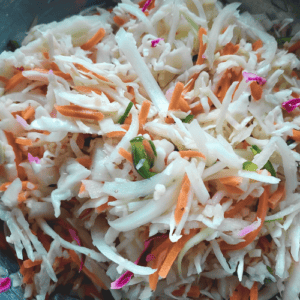
Pikliz is a spicy, tangy condiment made primarily from pickled cabbage, carrots, bell peppers, onions, and Scotch bonnet peppers, seasoned with vinegar and spices. It adds a burst of flavor to Haitian dishes, particularly fried foods like griot (fried pork) and fried plantains, yum!

Pikliz is often made in large batches and stored in jars, allowing it to be preserved for extended periods. Storing food is especially important for Haitians as they are often faced with food insecurity. We believe no child should go hungry. Our program in Haiti served over 10,000 meals to children in need last year. 

We hope you enjoy this delicious Haitian staple as much as we do and that it connects you in a deeper way with our extended Haitian family

Pikliz (Haiti)

Forward Edge International
Pikliz is typically used as a condiment on fried foods like griot (fried pork) and fried plantains, enhancing their taste and providing contrast with its acidity and heat. But honestly it's great on it's own as a summer side dish or when you need something crunchy with a bit of heat. Connect with our Haiti program by enjoying this recipe and learn how we're helping children in Haiti at www.forwardedge.org/haiti.
Prep Time 15 minutes
Cook Time 0 minutes
Course Side Dish
Servings 6

Ingredients
  

  • 1 cabbage
  • 2 carrots
  • 1 onion
  • 3 Scotch bonnet peppers or jalapeños
  • 4 garlic cloves
  • 2 tsp salt
  • 8 peppercorns
  • 1 cup white vinegar

Instructions
 

  • Cut the cabbage in half and using a shredder, shred one of the halves into a bowl.
  • Repeat the process for the carrots, onion, peppers, and garlic cloves.
  • Add the peppercorns, salt, and vinegar to the bowl. Mix all the ingredients thoroughly.
  • Transfer all the contents of the bowl including liquids into a large glass container and store in the refrigerator for at least 24 hours to allow the pickling process to complete.

Notes

Store in your refrigerator for up to three weeks.
Keyword condiment, crunchy, haiti, pikliz, slaw, spicey
community development

Why We Should Involve Children in Development

In his book, “Empowering Children”, former Forward Edge board member, Dr. Ravi Jayakaran, shares the importance of involving children in the process of their own development. When a community invests its resources in its children, it invests in its own future. Just as Forward Edge values all children and believes

Go to Blog »
child sponsorship

How to Write a Letter to Your Sponsored Child

One of the greatest joys a child receives is a letter from his or her sponsor. Sponsored children usually save all of the letters they receive and read them over and over again, they are such a source of encouragement and love for them. Writing to your sponsored child is

Go to Blog »
child sponsorship

Why Can’t I Instant Message My Sponsored Child?

1.86 billion people log into their Facebook account at least once a month–that’s almost 1/4 of the total global population! This number doesn’t even include other outlets like Instagram, Twitter, and Snapchat. People in developing countries are no exception to this global trend, and chances are, the child you sponsor has

Go to Blog »
mission trips

4 Practical Ways to Prepare for A Mission Trip

Before embarking on your first mission trip, there are a variety of things you can do to prepare yourself physically, mentally, and spiritually. This article will focus on some of the practical steps you can take to ensure you get the most out of your experience. Here are four things

Go to Blog »
Transform a Child's Life Through Sponsorship

Gyebaleki (hello), my name is Bashir

  • location

    Uganda

  • 6 yrs. old

    04-30-2019

Entered the program: July 2025


Bashir lives with his grandmother and four cousins in a four-room plastered bungalow-style house with cement and dirt floors. Bashir shares a bed with his grandmother and a younger cousin. Electricity is supplied to the house but is not connected since the family cannot afford to pay for it. For lighting, they use candles or flashlights. They have an outdoor kitchen constructed of bricks and use firewood for cooking and boiling water. Water is fetched from a nearby community borehole, and when it rains, it is collected in a tank behind the house.They have their own toilet facility which is semi-constructed. The family raises some chickens and goats for food and income.

Bashir was abandoned to his grandmother's care and she is raising him along with four cousins. She is the sole provider and is unemployed. She makes a small income from the animals she raises but meeting the needs of her family is difficult.

Sponsorship Level What's this?

Three $38 sponsorships are needed to cover the complete holistic care of one child. Cover one, two, or three sponsorships.