Life Advice Part 2: You Were Made to Serve

Tim Ainley, CEO of Forward Edge, recently shared an inspiring message at a graduation commencement ceremony that is a timely and impactful message for us all. But, especially for recent graduates, young adults, and teens, these words could be the guiding principles you need as you step into a world with a million different possibilities:

Read Part 1: Remember Whose You Are

Ok, the second thing I wish someone would have told me is this: 

You were made to serve 

Let’s go back to Ephesians 2:10, which says: We are God’s handiwork (poiema), created in Christ Jesus for good works, which God prepared in advance for us to do. 

God made us to do good works…to bestow charity upon others…to give…to love…to serve. 

We follow Jesus’ example, who came not to be served, but to serve, and to give his life as a ransom for many. 

In fact, do you remember the last lesson he taught the disciples in the upper room before going to the cross? He washed their feet and told them just as he has served them, they now ought to go and serve one another. 

That’s the purpose you were made for, graduates: to serve others. 

Let me ask any of you who have served on a mission trip…do you feel like even though you went to give of yourselves, you actually got more out of the experience than you gave? 

Yes! That’s the common theme we hear among people who serve with Forward Edge on mission trips. Because it’s how God designed us! 

And here’s what’s fascinating: science confirms this. 

Did you know that there is a positive biological response to altruism? That serving others, and giving to others, is actually good for your mental health?  

You see, when you give to someone else or serve them, with no motive behind it, no strings attached, your brain releases three chemicals: oxytocin, serotonin, and dopamine.  

Doctors call these three chemicals the happiness trifecta because when your brain releases them, it brightens your mood. It increases your joy. 

You see, God designed us to serve others, and He biologically wired our bodies to flourish when we do so. 

You were made to serve. 

Read Part 3: Let God’s Will Come to You

Building Connections

Capturing Connection: Photography on the Mission Field

Photography is more than just a way to document your mission trip—it’s a bridge to connection, a chance to honor the stories of those you encounter. As you step into communities, camera in hand, pause to reflect. Are you capturing moments with care and respect? Are your photos fostering dignity rather than reducing people to subjects?

Go to Blog »
From our CEO

Life Advice Part 3: Let God’s Will Come to You
Tim Ainley, CEO of Forward Edge, recently shared an inspiring message at a graduation commencement ceremony that is a timely and impactful message for us all. But, especially for recent graduates, young adults, and teens, these words could be the guiding principles you need as you step into a world

Go to Blog »
child sponsorship

Sponsoring a Child During COVID-19

During these times when most of us are ‘social distancing’ and ‘sheltering in place’, we probably have much more time on our hands and yet are unable to be in touch with many of those on our minds. This is especially true of our sponsored children. We know they and

Go to Blog »
community development

Why We Should Involve Children in Development

In his book, “Empowering Children”, former Forward Edge board member, Dr. Ravi Jayakaran, shares the importance of involving children in the process of their own development. When a community invests its resources in its children, it invests in its own future. Just as Forward Edge values all children and believes

Go to Blog »
Transform a Child's Life Through Sponsorship

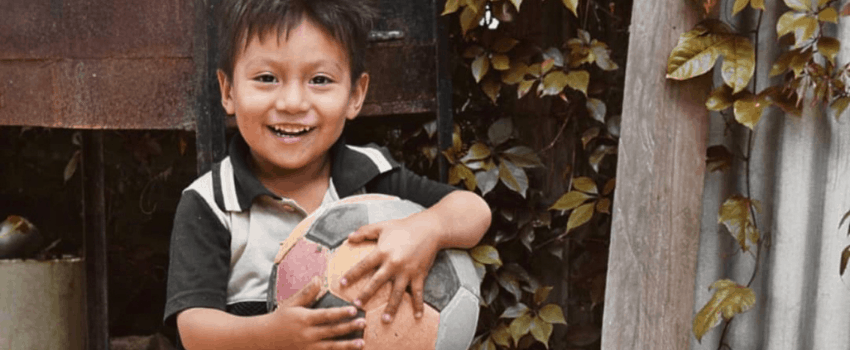
Hola (hello), my name is Caleb

  • location

    Mexico

  • 11 yrs. old

    06-05-2014

Entered the Program: February 2025

Caleb lives with his parents, little sister, and adopted older brother in a one-room adobe house with a tin roof, and concrete and dirt floors. The family shares a bedroom, except for his brother, who has his own, separate from the house. They cook with wood and get water from a hose on their property. The bathroom facilities are outdoors.

Caleb’s parents met in Oaxaca City when they both worked there. After a year, they got married and eventually moved to the village where his father was born. Caleb’s parents intended to be in the village temporarily but the family required help tending their crops, so they decided to stay. They also adopted Caleb’s cousin as their own child because there was a need.


Sponsorship Level What's this?

Three $38 sponsorships are needed to cover the complete holistic care of one child. Cover one, two, or three sponsorships.